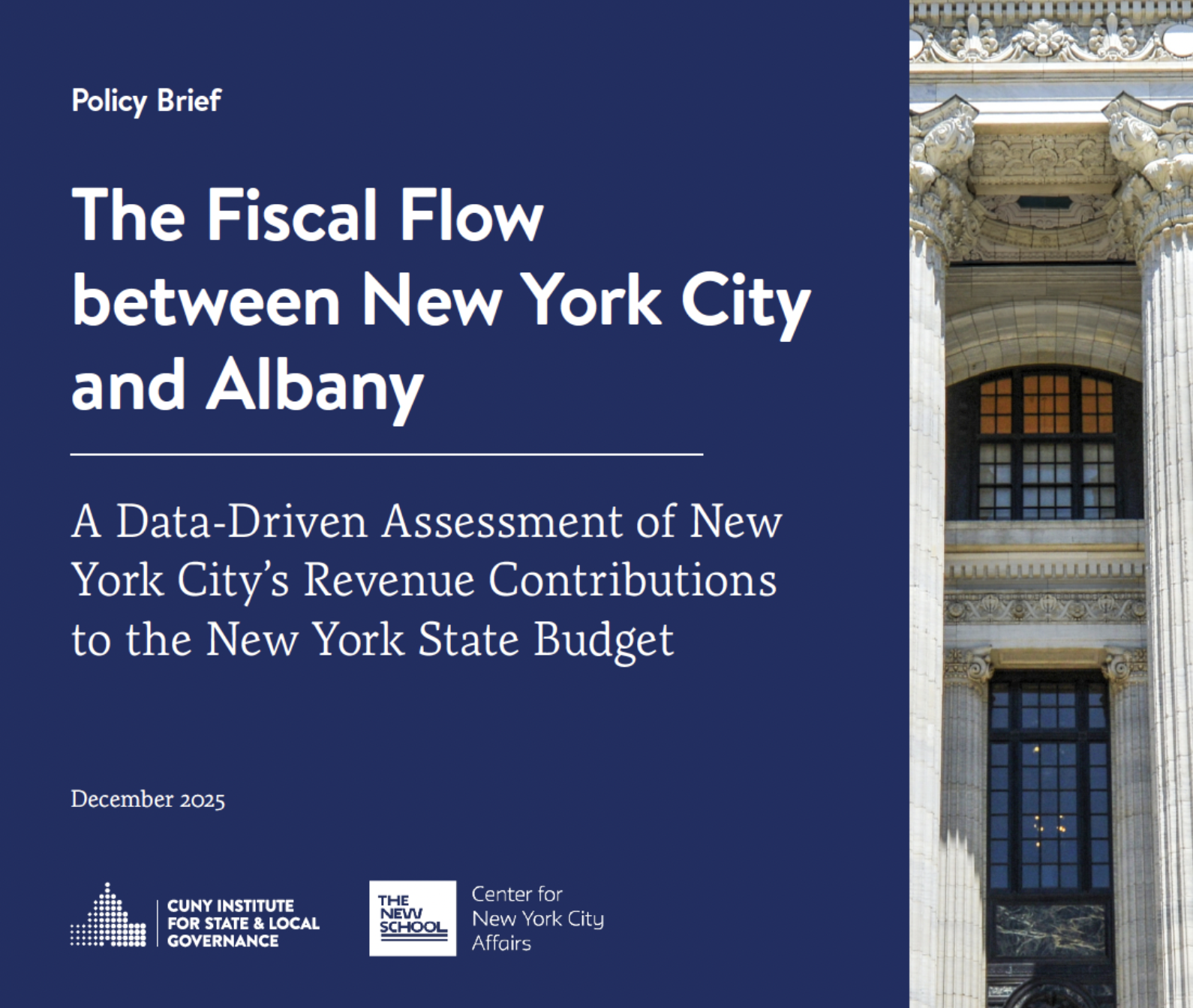




The Center is releasing today a brief data update to its December report, The Fiscal Flow between New York City and Albany. The Fiscal Flow report documented that while New York City’s economic growth has been the driving force behind the growth over the past decade in New York State revenues and expenditures, the share of State expenditures benefitting the city has lagged far behind the growth in the State revenues. This brief update provides a preliminary estimate of the city’s revenue and expenditure shares for FY 2025 and confirms that New York City’s fiscal flow with Albany remains hugely imbalanced.
In response to City Hall’s request that the State respond to the sizable fiscal flow imbalance as documented in the December report, the Governor announced in mid-February that she would support increased aid for New York City, committing to $1.4 billion in new aid over two years, with $510 million on a recurring basis. While that is positive, on a recurring basis that amounts to about one-third of one percent of State revenues while the preliminary estimate for FY 2025 pegs the fiscal flow gap at about 14 percentage points.
As the State Legislature and the Governor enter the final stage of negotiations over the FY 2027 State budget, the City seeks State authorization to increase personal and business income taxes to close a projected City budget gap and to fund additional service needs. The databrief points out that the State has increased its top personal income tax rates by over four percentage points since 2008 while it has resisted raising the top City personal income tax rate by more than a quarter-point. Meanwhile, the millionaire share of total income in New York City far exceeds the state and national levels and the number of New York millionaires increased strongly according to the latest data (2024).
The Center partnered with the CUNY Institute of State & Local Governance on the December report and the March update.
There's no previous post
Back to PublicationsThere's no next post
Back to Publications