‘You Shouldn’t Have to Erase Who You Are in Order to Succeed’
Urban Matters: Mizael, thanks for this chance to ask you about your newly published Bridging the Gap guide. How did it come about, and what are its goals?
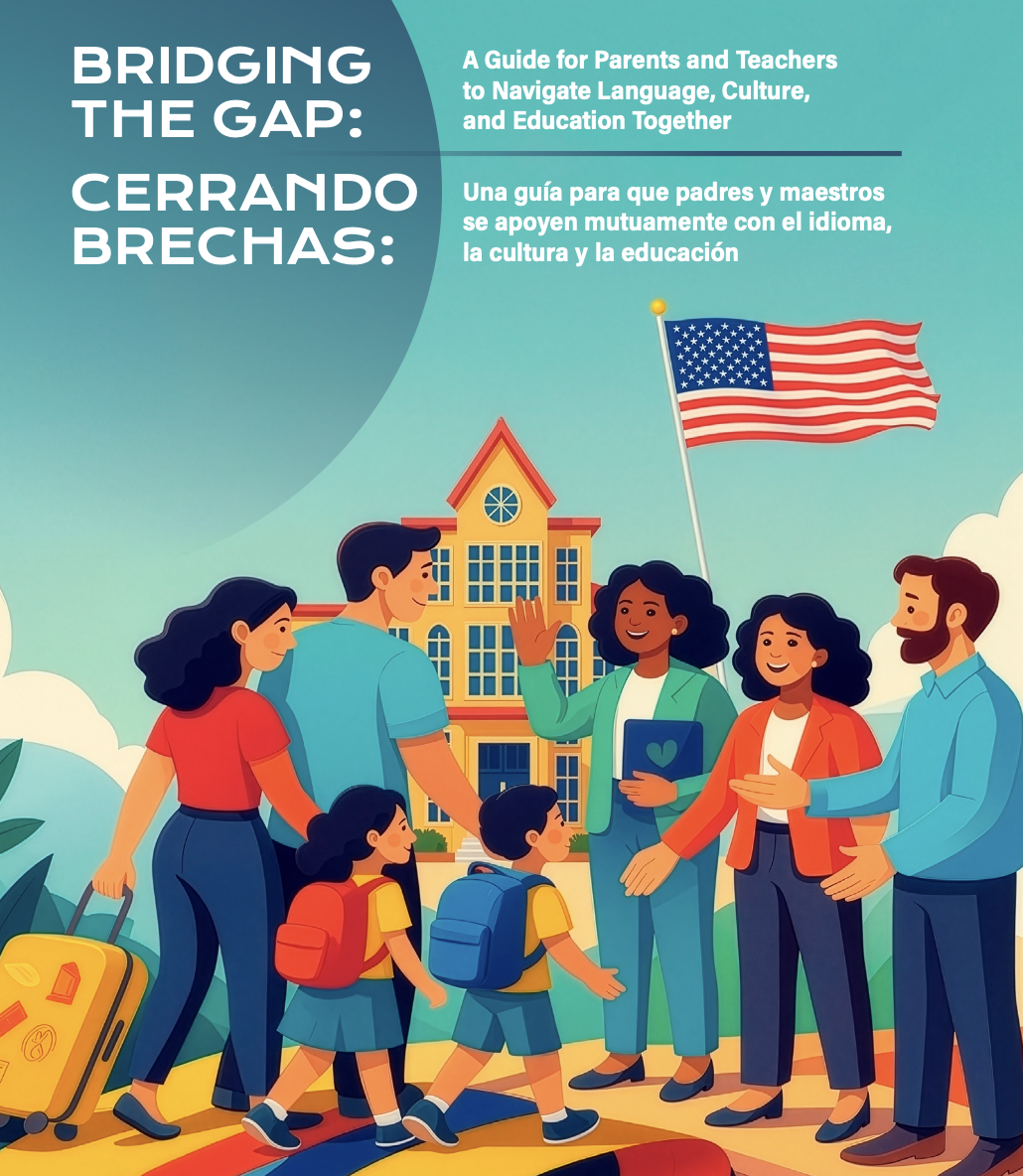
Mizael Becerra: It started with a very simple goal: helping parents support their children in English learner (EL) classes. It came out of a collaboration with the Institute of Latin American Studies (ILAS) at Columbia University. And it quickly grew into something broader.
There are already many materials for English language learners, and a large amount of support available for ELLs and immigrant families. However, very little of it is culturally relevant for newcomers like Venezuelan, Colombian, and Haitian families, especially those arriving through forced migration.
I began shaping the guide after visiting shelters in New York City and speaking directly with parents from these communities. They shared what they struggled with the most: understanding the school system, communicating with teachers, helping with homework, and supporting their children emotionally. Those conversations helped me realize the guide could not focus only on English language learning but also socioemotional support, communication, and access to information about their rights.
Conceptually, the guide draws on ideas like ‘funds of knowledge,’ translanguaging, and culturally responsive teaching, but I wanted everything to be practical. For example, instead of simply recommending that families read [to children] in their home language, the guide includes step-by-step activities with specific texts and clear instructions on how to connect reading in L1 [one’s first language] to English development. It also incorporates technology and AI tools in ways accessible and realistic for families.
The project also expanded to support teachers working with these communities. It’s bilingual – Spanish and Creole sections directed to families and English sections directed to educators – with each side understanding what the other is learning. The goal was to create something research-based and theoretically consistent, but also practical and easy to use in real classrooms and communities, and in spaces like back-to-school nights, parent workshops, and meetings with families.
UM: Why the focus on students recently arrived to our area from Venezuela, Colombia, and Haiti?
Becerra: In recent years we’ve seen a noticeable increase in students arriving from these countries, often under difficult circumstances. The Venezuelan diaspora has grown dramatically due to an ongoing political and socioeconomic crisis; it’s been described it as one of the largest such displacements in the world in recent years. Colombia continues to experience displacement linked to insecurity and violence, and many Haitian families have been forced to migrate due to a combination of natural disasters, political instability, and economic hardship.
For schools receiving these students there were very few materials that were culturally, socially, and educationally relevant. Most resources for English learners are very general and don’t consider forced migration or interrupted schooling.
As a teacher, I’ve worked directly with many students who have gone through such difficult transitions. My role has not only been teaching English and supporting academic development, but also helping them integrate, feel safe, and build confidence in a new environment. In many cases, that means advocating for them and helping families understand the system.
The intention was not to limit the guide to these three groups, but to offer strategies that can be adapted to other multilingual communities as well.
UM: In terms of needs and experiences, what do students coming from those nations have in common?
Becerra: While every student’s story is different, there are some clear commonalities. Many of their families have gone through forced migration; leaving their country was not really a choice. It was about safety, survival, or the need to find better conditions for their children. Also, many did not come directly to the United States, but lived in other countries first and went through multiple transitions before arriving here.
Another important commonality is instability. Some families are living in shelters or temporary housing, which affects everything: routines, emotional well-being, communication with schools, and even students’ ability to focus consistently in class. On top of that, many students arrive after interrupted schooling, and families often feel lost because the U.S. education system works very differently from what they knew before.
Their needs go beyond learning English. There is often fear, uncertainty, limited knowledge of their rights, and confusion about how to communicate with schools, understand grading, or support learning at home. Many parents want to help, but are also working long hours trying to survive.
The guide tries to respond to those needs in practical ways. It includes step-by-step strategies families can actually use, comparisons between the U.S. school system and what many families may be familiar with. It also helps teachers better understand the experiences students may carry with them when they enter the classroom.
UM: What role has the InsideSchools project of the Center for New York City Affairs played in your work?
Becerra: The InsideSchools team played an important role. In addition to co-sponsoring the guide and providing feedback throughout the process, they helped facilitate visits to shelters in New York City that made it possible to speak directly with parents and students and identify their most immediate needs. That influenced the structure and content of the guide.
InsideSchools’ extensive experience helping parents navigate school options and make informed decisions added an important perspective. Our collaboration allowed the guide to reflect both classroom realities and the broader challenges families face when trying to access education in a new system.
UM: How and to whom has the guide been distributed, and what’s been their response?
Becerra: The guide is publicly available through Columbia University’s Academic Commons. It is free; anyone who needs it can download and use it. It is also available on the ILAS K-12 Outreach Program website and through the Latinx and Latin American Faculty Working Group at Teachers College, Columbia.
It was launched during a February 26th Zoom event with teachers, parents, administrators, and academic partners. The download link was shared, and the initial reception has been very positive.
UM: Tell us a bit about yourself. How did you come to this work, and what next steps do you envision taking?
Becerra: My academic background is in English as a Second and Foreign Language education, bilingual education, and international educational development. I’m also currently pursuing a Doctorate in Education at the Universidad de Los Andes in Venezuela, where my research focuses on multilingual education, language ideologies, and educational practices in migratory contexts.
I’m also Venezuelan, and in many ways this work comes from two experiences. I understand the school system from the inside, but I also understand what it feels like to arrive in a new country with a new language, and try to figure everything out. That has shaped not only how I teach, but also how I think about students, families, language, and access.
I simply care deeply about this work. I believe students deserve a good, quality education, and that their language and cultural background matter. They should not feel they have to erase who they are in order to succeed. A big part of what motivates me is trying to support those who often feel unseen, unheard, or unsure.
I’d like to continue expanding this work through collaboration with schools, districts, and organizations supporting multilingual communities. I’m open to workshops, professional development, consulting, and research collaborations. I see this guide as part of a longer path, not the end of it.
Mizael Becerra teaches English as a Second Language to middle school students in New Jersey. He holds a bachelor’s degree in Modern Languages and an MSc in Foreign Language Teaching and Learning from the Universidad de Los Andes (Venezuela), and an MA in International Educational Development from Teachers College, Columbia University. He is pursuing a doctorate in education at Universidad de Los Andes; his research focuses on language ideologies, multilingual education, and educational practices in migratory contexts.
Photo credit: InsideSchools