


We are excited to begin sharing insights from our economic policy team as they relate to the latest city news. Jaylexia Clark, CNYCA's labor market analyst, writes why Waymo's pause on testing self-driving cars is an opportunity to strengthen worker protections against AI.
This April, during a trip from LaGuardia Airport to Manhattan, I spoke with Uber driver M. Khalid about the growing debate over autonomous vehicles and Waymo’s ongoing attempt to expand to New York City.
Khalid, who has driven in New York City for more than two decades and witnessed Uber’s arrival firsthand, described Waymo as part of a broader pattern: technology companies enter the city’s market and accumulate vast amounts of wealth, all while workers absorb the economic consequences.
This was a story I knew all too well, as a researcher focused on AI’s impact on workers who are already marginalized in today’s rapidly changing economy. Interviews I conducted with rideshare drivers and rideshare labor organizers in Chicago reflect that drivers suspect the tech platforms they depend on are working “against workers” to maximize the platforms’ profits. Eliminating the driver altogether is a continuation of those suspicions.
In New York City, however, we are in a rare pause regarding the impact of driverless vehicles: On March 31, city and state permits that allowed Waymo, which uses ML (machine-learning) algorithms, to test its driverless taxis expired, and it’s unclear what will happen next.
In several U.S. cities, autonomous vehicle deployment has already displaced rideshare and taxi drivers. New York City, however, remains a significant barrier to expansion because current New York State vehicle and traffic laws still require a human operator behind the wheel.
My research suggests that whenever the next flashy tech company comes knocking, it’s an opportunity for policy makers to set forward critical and innovative policies that prevent labor disruption, and are based on frameworks prioritizing workforce and economic stability. This doesn't mean cutting off tech companies, but rather making clear that tech companies seeking to enter the city can only do so alongside transparent empirical data on the impacts of AI, and under ethical standards and protocols for regulation that protect both workers and consumers.
A Permit Does Not Equal Approval
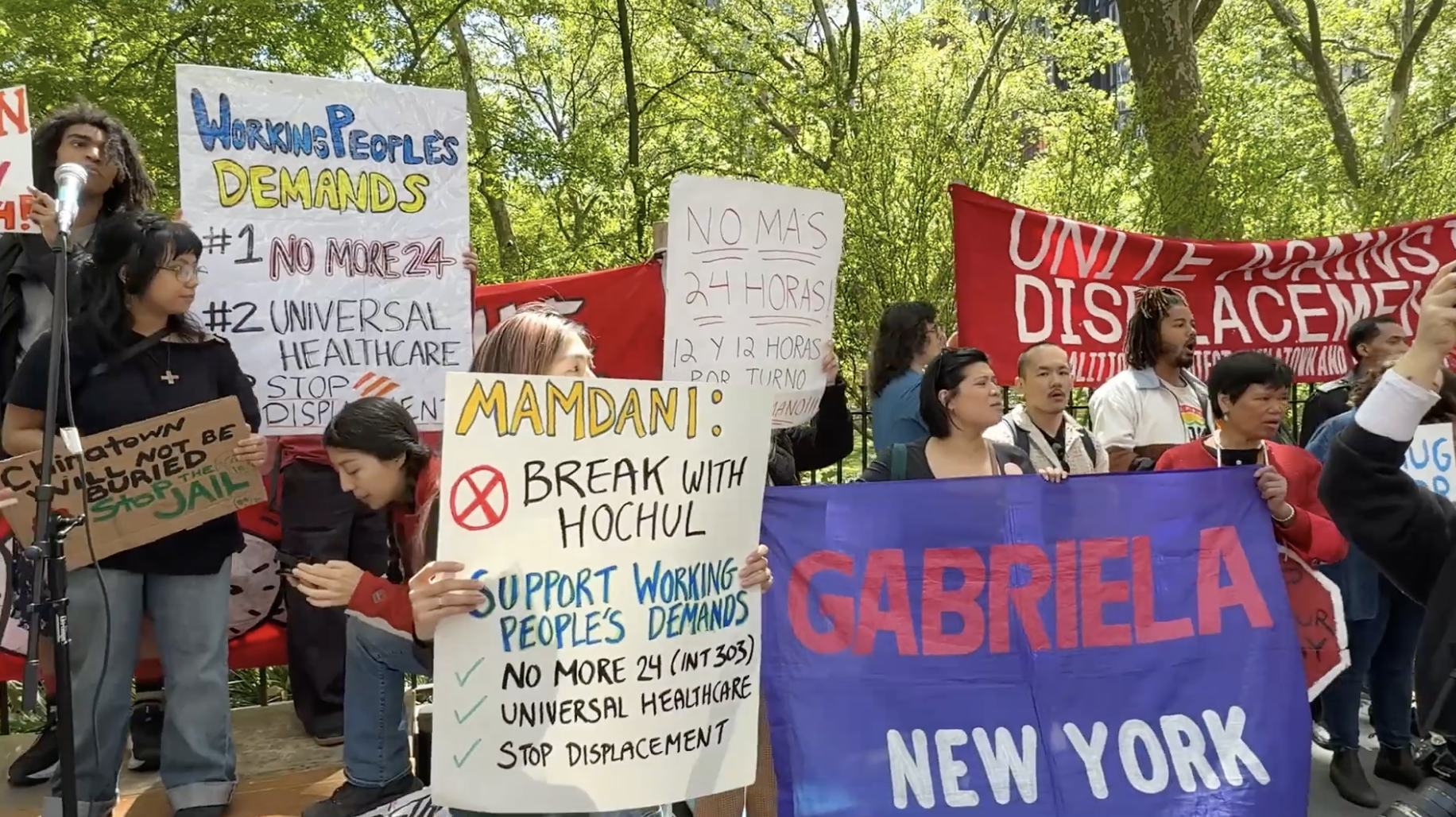
New York’s 2018 State budget legalized tests for driverless vehicles, as long as a person holding a valid driver license is in the driver’s seat while the vehicle is operated on public highways. Last August, New York City issued Waymo its first permit to test eight cars in Manhattan and Downtown Brooklyn. Then-mayor Eric Adams championed the effort as an “innovative way to safely move our city forward.” Mayor Mamdani, who has a strong alliance with taxi workers, could set a different path.
Although Waymo was permitted to operate on a test-run basis, they still face legal barriers. Under New York State law, any company testing autonomous vehicles must have a human operator in the car who can take control at any time. This effectively means there is no current pathway to fully autonomous operation, unlike in other states. As a result, New York State law has prevented companies like Waymo from entering the New York market and disrupting a labor market of over 100,000 vehicles operated by taxi owners, app-based independent contractors, or payroll truck drivers.
Rideshare and taxi drivers are not the only workers at risk; the New York City Economic Development Corporation (NYCEDC) predicts that over the next 10 years, 244,000 jobs (five percent of the workforce across the five boroughs) are at risk of being displaced by AI—slightly less than the seven percent expected nationwide.
If left unregulated, the AI-related job displacement and disruptions could put millions of workers at risk. To keep New York’s AI job displacement numbers as low as possible, it’s essential that New York City and State go further than this current pause.
The City and State can set policies for regulating AI job loss
New York policymakers should review and strengthen public health and safety laws to require human involvement in a wide variety of sectors – from transportation and warehousing to care work – that will create barriers to entry in other industries and occupations and can directly prevent AI-driven job displacement. In addition to requiring humans to operate vehicles, the law could extend to other machinery that poses a risk to public safety, like forklift operations.
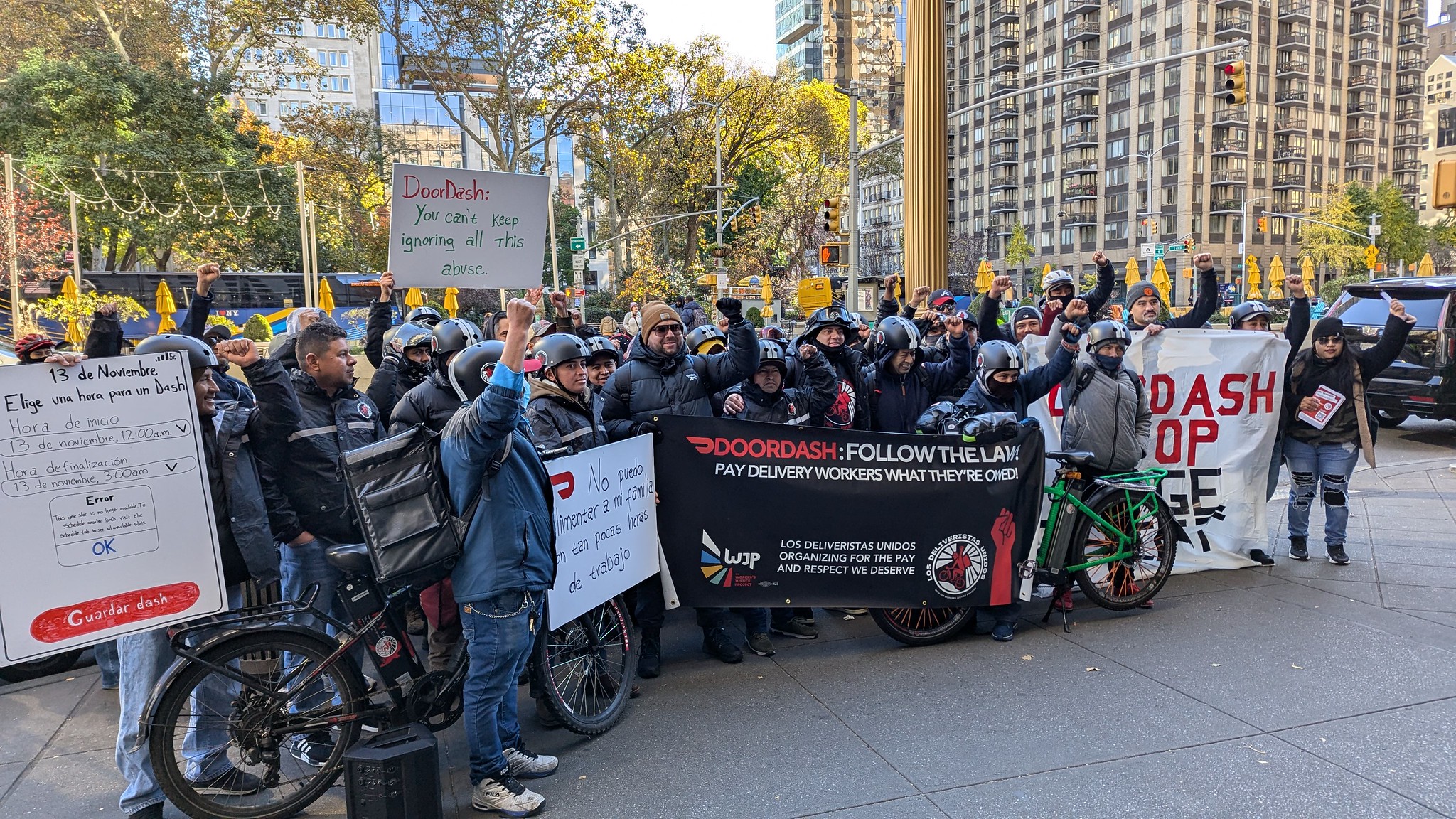
New York City is one of the most complex urban environments for automated driving, requiring regulators to carefully evaluate safety, traffic flow, and interactions with pedestrians, cyclists, and emergency services. When it comes to gig workers, the city has led the way nationally in establishing new pay standards and fighting against undue deactivation. City leadership can build on this momentum to ensure that workers share in the economic benefits created by AI.
At the same time, there are active efforts to change the current law that requires a human operator in a self-driving car.
Efforts to make way for Waymo have already been happening behind the scenes, whether you realized it or not: “Waymo, Zoox, Tesla and others already operate in 10 U.S. cities and are expanding. Waymo alone has spent over $3 million lobbying city and state leaders,” as Streetsblog shared last month. It’s not just autonomous vehicle companies; many low-wage workers in the city are battling billion-dollar tech campaigns seeking to displace them with their own shiny new automated services.
This is exactly why this moment in the city is crucial to protecting workers and thinking ahead about the AI job displacement to come. The case of Waymo offers a unique opportunity to proactively set policy in a sector that’s been incredibly vulnerable to tech innovations.