
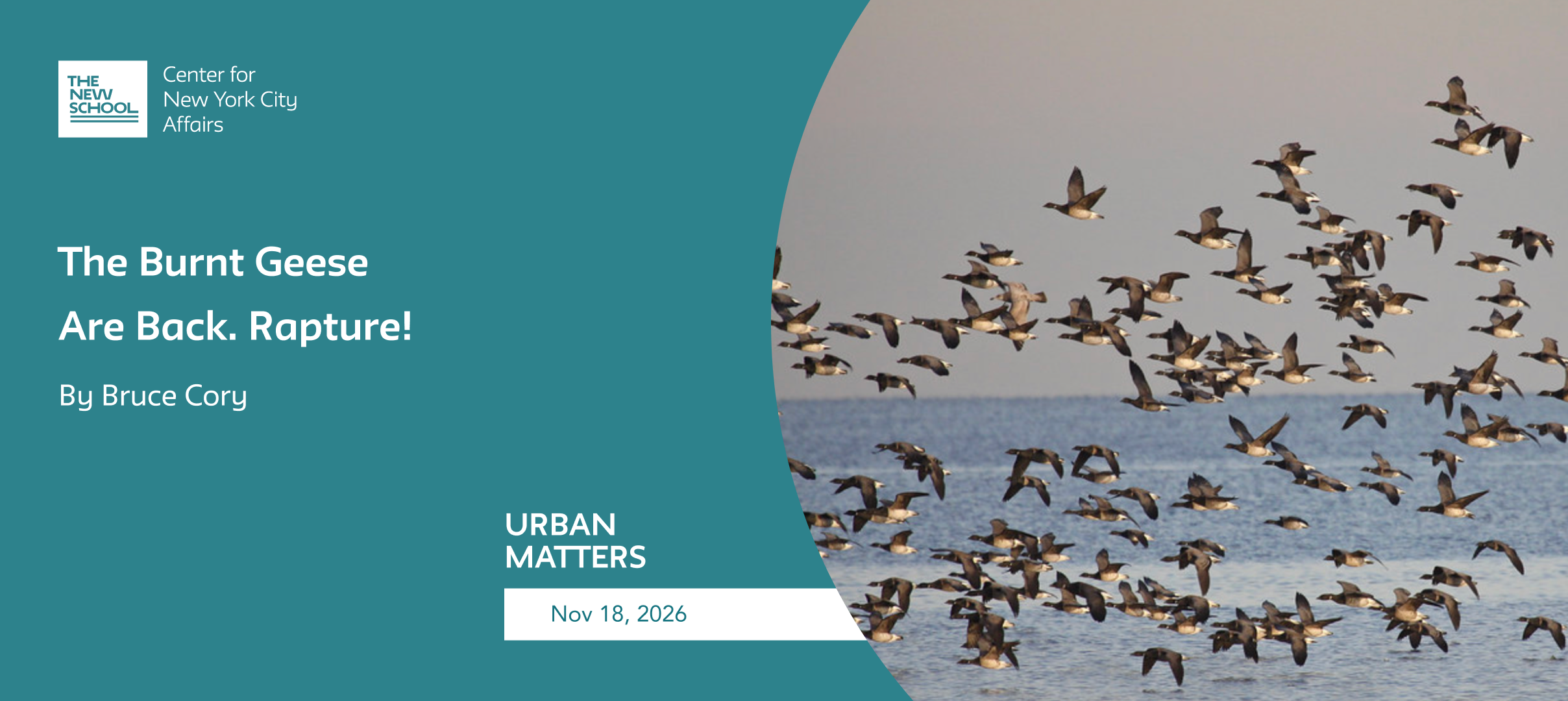


At the outset, please understand: the headline above intends no disrespect for what are truly admirable animals, even if it does slightly misidentify them. They’re actually called Brant Geese. But “burnt” doesn’t miss the mark by much. That’s because “brant” derives from an Old Norse description: brandgás, meaning “burnt geese,” a reference to goose heads, backs, and wings of the deepest black.
Much about Brants merits our fullest respect. No other goose in North America nests further north than they do. Few migrate such extraordinarily long distances. And from now until next spring, it will be our good fortune to have them in our midst here in the New York region.
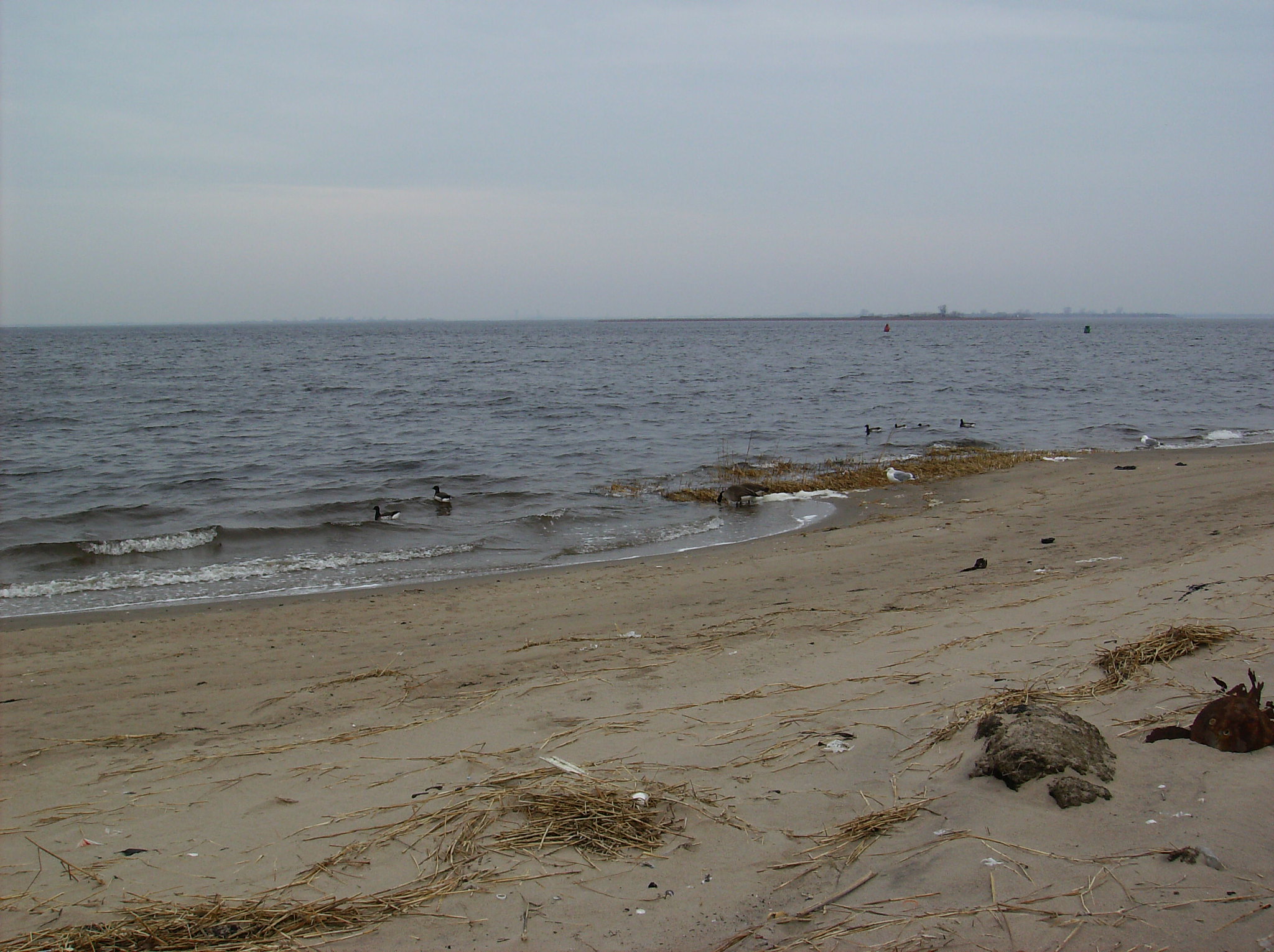
A few weeks ago, flocks of Brants numbering in the thousands took off from their rapidly chilling summer breeding grounds on the shores of Arctic Canada. They’ve now touched down en masse at their winter homes along the Jersey Shore and in the shallow waters of Jamaica Bay, sheltered between Canarsie, Howard Beach, and the long, thin barrier peninsula of the Rockaways.
(In the West, Brants are also just completing an equally remarkable fall migration from Alaska’s Beaufort Sea to bays and inlets on the California coast.)
Seeing these charcoal-colored, saltwater-loving geese always lifts my spirits. Here are four reasons why.
First, there’s my admiration for them as truly accomplished world travelers. Twice a year, every spring and again in autumn, following ancestral flight patterns established many thousands of years ago, they make an astounding roundtrip of some 4,000 miles to the Arctic and back, often at altitudes approaching a half-mile above the Earth. No radar; no GPS; no weather alerts to inform their journeys. That their migrations routinely succeed so spectacularly approaches the miraculous.
Second, they possess a beauty, at once both restrained and robust, that has grown on me, year by year. At first blush, they’re not the most stylish of waterfowl. I’ll readily concede that for sheer balletic elegance, nothing matches a great formation of their larger Snow Geese cousins taking off against a winter sky. In size, the less prepossessing Brants barely outdo the familiar Mallards that quack and paddle year-round in our park ponds. But as with gymnasts and quarter horses, beneath their comparative stubbiness lies a winning, heart-quickening dynamism and staying power. And then there’s their engaging affection for one another, evidenced by their constant, gurgling, companionable calls while in flight.
Third, there’s the way their just-completed annual return punctuates nature’s calendar in New York. For close to eight months (with only a brief summer intermission) wave after wave of warblers and songbirds, Egrets and Ibises, fish-hunting Ospreys and nectar-sucking Ruby-Throated Hummingbirds have pulsed north and then south through our region along the great migratory Eastern Flyway.
Now, as winter tightens its grip on the Northern Hemisphere, that avian traffic flow has ended. The visitors and transients who delighted and awed us through the warm weather months have retreated to the Gulf Coast, the Caribbean, and the llanos and rainforests of South America. Perhaps there’ll be a mid- winter polar vortex driving swivel-necked Snowy Owls and garrulous Gray Jays south from Canada. If not, the birds with us now are the ones who’ll be with us until spring. They include our year-round Cardinals, Robins, White-Throated Sparrows, and Blue Jays as well as the birds – Brants included – that over-winter in New York. So, as the days shorten, the shadows lengthen, and the months of hemispheric dormancy settle in, it’s time to once again take cheer and companionship where it’s close at hand – including from the Brants.
And fourth and finally: Yes, they’re right at our doorsteps. You don’t have to travel great distances to see them. You don’t even have to drive. In Brooklyn, bundle up and board the B3 bus as it weaves through the frenetic Chinese/Russian retail mashup along Avenue U. Then hop off at the Marine Park Salt Marsh. Bring some binoculars, so you can also spy out compulsively diving Buffleheads and pint-sized Ruddy Ducks in the brackish waters of Gerritsen Creek and perhaps sight a Great Blue Heron stalking its shores.
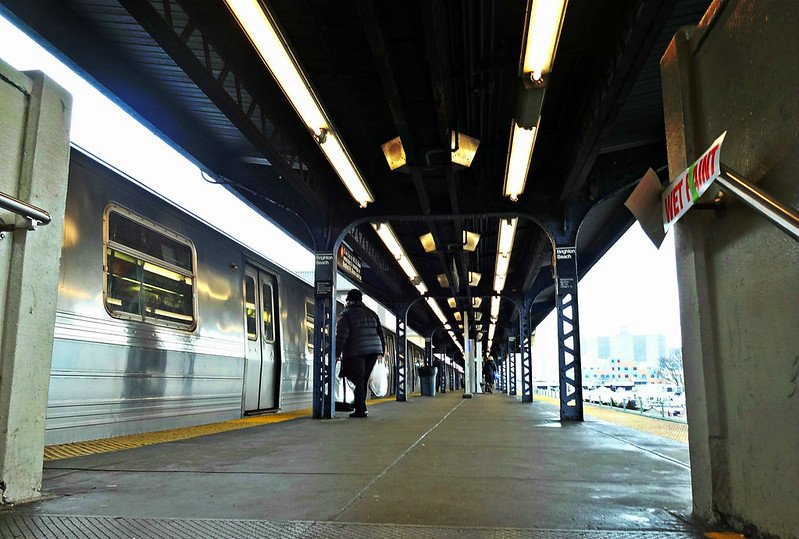
Or, rattle across Jamaica Bay on the Rockaway-bound “A” train. Get off at the Broad Channel stop, and take a few minutes to soak up that community’s vibe of “Wait, how did I wind up in a New England fishing village?” Then make the short walk to one of the premier birding hotspots on the East Coast: the 12,600-acre Jamaica Bay Wildlife Refuge. The visitors’ center may only be open Saturdays and Sundays but you can get directly to the refuge’s trails during daylight hours all week long.
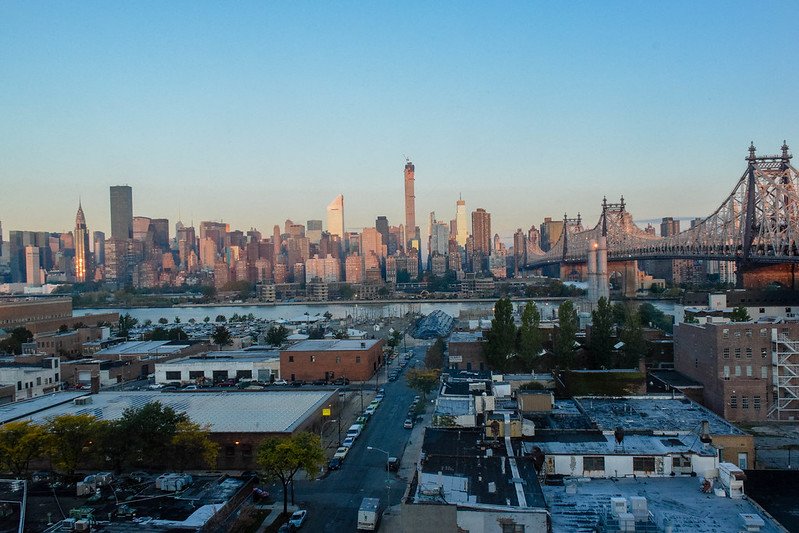
Follow the main gravel path west. Even if there’s snow on the ground, marvel at the prickly pear cacti that thrive on such sandy reaches of Long Island. On a bright winter day, admire the backlit you-can-almost-touch-it Manhattan skyline and how the sun’s low, slanting rays accent the refuge’s golden expanses of Spartina grass. And as they bob in the bay’s gentle waves, give a thought, and perhaps a bit of your heart, to the Brant Geese, with us for another season.