
First, They Came for Their Health Care. Now They’re Coming for Their Housing.
The Trump administration’s first attack on immigrant communities targeted their health care.
Through the H.R.1 legislation – also known as the One Big Beautiful Bill Act that became law last July – Washington moved to strip health coverage from millions of immigrants who already struggle to access care. In New York, the changes to immigrant eligibility rules under H.R.1 mean the loss of Federal funding for approximately 670,000 people.
Now, the administration is turning its sights on another basic human need: housing.
A new proposed rule from the U.S. Department of Housing and Urban Development would deny housing assistance to families with mixed immigration status – households where some members are citizens or have legal status and others do not. Today, these families can remain together in subsidized housing with assistance prorated only for those who qualify. The new rule would effectively end that policy, forcing families to separate or lose their homes.
The cruelty is as obvious as the consequences.
The Center on Budget and Policy Priorities (CBPP) estimates that nearly 80,000 people (including about 37,000 children) could lose their housing assistance if this rule is finalized. Many of these children are U.S. citizens. Their only “crime” would be living in a family that includes someone without eligible immigration status.
New York would be disproportionately affected by the rule, as it is home to the largest share – about 13 percent – of mixed-status households receiving Federal housing assistance of any state. According to the CBPP, an estimated 2,540 mixed-status families would be barred from help in New York.
The damage would fall disproportionately on Hispanics, who make up the largest immigrant population in the city and are heavily represented among low-income renters who depend on Federal housing assistance to stay afloat.
For many of these families, losing housing support would mean facing an impossible choice: be separated from loved ones or risk homelessness.
Let’s be clear about what the policy would actually do. It would deny housing assistance even to eligible family members – including U.S. citizens – if someone in the household lacks qualifying immigration status. In other words, a citizen child could lose stable housing simply because a parent is undocumented.
The Trump administration claims this rule is about fairness and protecting taxpayer resources. But immigrants already contribute billions in taxes every year. In 2023, immigrant New Yorkers paid more than $70 billion in taxes and generated about $160 billion in spending power, according to the American Immigration Council. And people without legal status have never been eligible for housing assistance themselves. Under current policy, the government simply adjusts the subsidy so that only eligible members receive support.
What the new rule does instead is weaponize housing policy to target immigrant families.
The broader consequences would be devastating. Housing instability increases the risk of eviction, homelessness, and family separation. Children forced to move frequently suffer academically and emotionally. Communities lose stability. Cities like New York, which already facing a severe housing affordability crisis, would see even more pressure on shelters and social services.
When the Trump administration first proposed a similar rule in 2019, it sparked immediate legal challenges from states, cities, and housing advocates across the country. Ultimately, the policy was never implemented.
New York helped lead that fight then, and it must do so again now. With more mixed-status families receiving Federal housing assistance than any other state, New York has both the most at stake and the clearest responsibility to stand up for the thousands of New Yorkers who would be pushed toward housing instability by this cruel and unnecessary policy.
David R. Jones is president and CEO of the Community Service Society (CSS), a leading voice on behalf of low-income New Yorkers for more than 175 years. This piece, which originally appeared in El Diario/La Prensa on March 19th, appears here with the permission of the author and CSS.
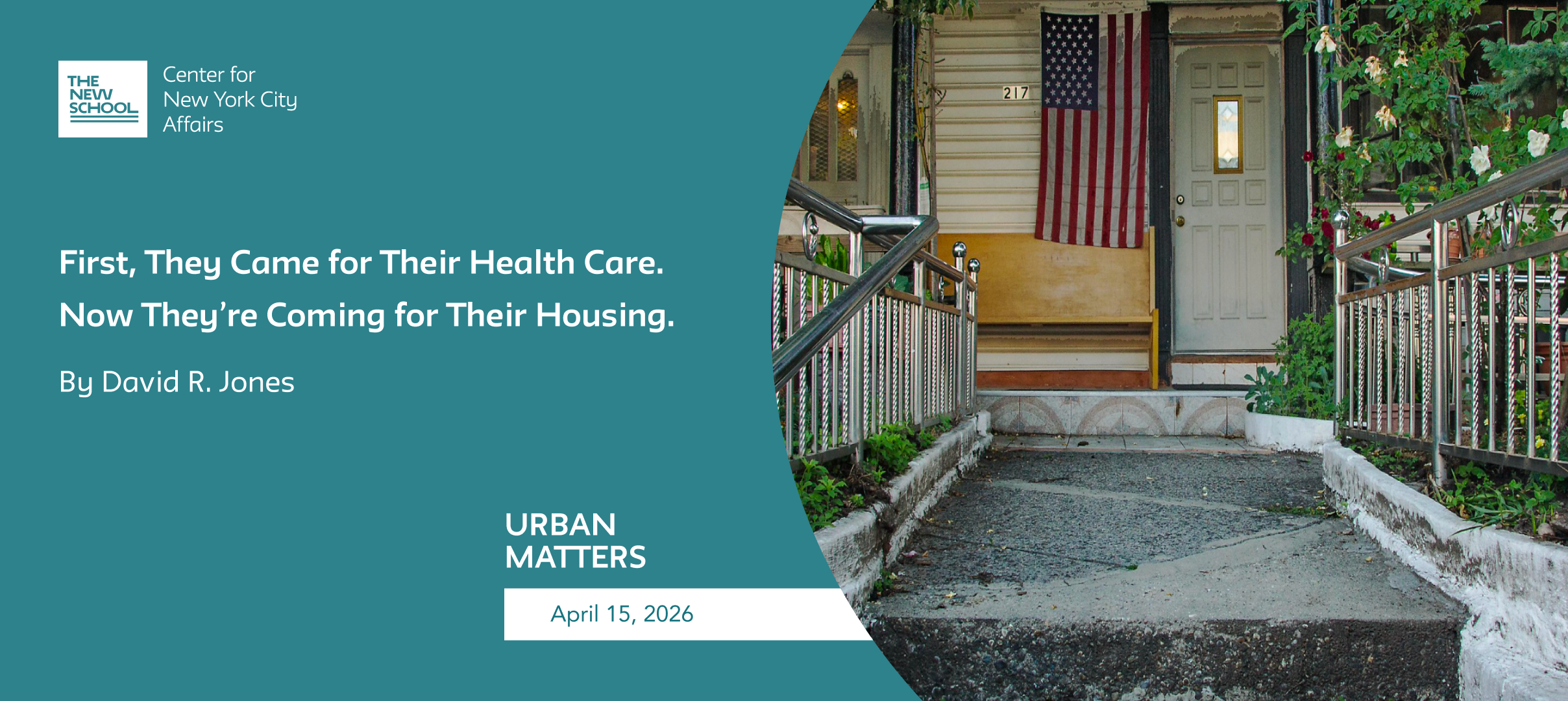
Photo by: Doug Turetsky.