


By most measures, managing NYC Public Schools (formerly known as the Department of Education) presents towering challenges. It spends far more money (some $38 billion in the current fiscal year) and employs far more workers (over 120,000 full-time personnel) than most other City agencies combined. With an enrollment of more than 800,000 students, it reaches into the life of every neighborhood – and, in many communities, virtually every block – of the city.
Despite that, and even after more than nine months at City Hall, Mayor Zohran Mamdani’s public school agenda remains in many respects a surprisingly blank slate. But the odds of that continuing seem slim.
Where will the schools ultimately come down on AI? What rubric will Mamdani apply to deciding thorny questions of school mergers or co-locating charter and traditional public schools? What will be the plan for handling the contentious and costly issue of private school placement of students with disabilities or for devising adequate dyslexia screenings and services?
On these and other matters, Mamdani and Schools Chancellor Kamar Samuels would be wise to forge a partnership with a long-overlooked but increasingly assertive and valuable institution:
New York City’s pseudo-school board, the Panel for Educational Policy (PEP).
To see why, a little background is in order.
Unlike elected school boards elsewhere that have broad budgetary, curriculum, purchasing, and personnel powers, our PEP’s scope is limited by the 2002 State law that established mayoral control of the city’s public schools, long run until then by a distinctly non-mayorally controlled Board of Education.
The law gives the mayor power over appointing the chancellor, collective bargaining, and, with City Council approval, the public schools budget. As something of a concession to the notion of checking this substantial mayoral power, the PEP was tacked on to the legislation – while also giving the mayor authority to name eight of its 13 members.
From the outset, however, the PEP was barred from playing a management role. The law bluntly stated, “The board shall exercise no executive power and perform no executive or administrative functions. Nothing herein contained shall be construed to require or authorize the day-to-day supervision or the administration of the operations of any school within the city school district of the city of New York” but “the board shall have the power and duty to . . . approve standards, policies, objectives, and regulations proposed by the chancellor directly related to educational achievement and student performance.”
Early in its life, Mayor Michael Bloomberg let the PEP know who was boss when he removed several of his appointees who had the temerity to oppose his proposal to establish gates on promoting students to the fourth and eighth grades. He then ignored the PEP when implementing controversial policies co-locating charter and traditional public schools, closing large high schools and creating new smaller schools, restructuring community school districts into larger regional groups, and more, all without the PEP’s approval.
By 2009, with the public tiring of this unitary rule, the State Legislature amended its bar against PEP managerial involvement by adding two important new powers (also requiring public hearings): the ability to rule on school building utilization, and on many vendor contracts worth more than $1 million.
In 2023, the Legislature further diluted mayoral autocracy (while maintaining a mayoral PEP majority) by: increasing the number of PEP members to 23 with multiple representatives appointed by parent councils; mandating a State-nominated PEP chair; and barring removal of members based on their votes.
Now, after decades of acquiescence, the PEP is restive, having recently turned back chancellor proposals for an AI-centered high school and an Upper West Side school merger. After first rejecting a contract with the Oracle corporation, the PEP, with its new Mamdani-appointed majority, recently approved the measure, a scenario similar to earlier school bus contracts which were only approved after extended negotiation between the PEP and chancellor based on promises of reform.
A full complement of Mamdani appointees has taken PEP seats while many carry-over members from other appointing authorities remain. How the full PEP now proceeds, in support or in opposition to a still-inchoate Mamdani/Samuels agenda, will determine the future of the public schools.
It is unlikely to be simply a rubber stamp body. The Mamdani appointees are not patronage-based potted plants likely to reflexively take orders from City Hall. Many have long histories working in and around the public schools and have their own policy opinions. Nor, based on my sources, has Mamdani insisted on fealty as a condition of appointment. This is an experienced group ready to exercise independent judgment when it comes to chancellor initiatives.
Add to this mix borough president and parent appointees who have often served an oppositional role on the PEP. Structurally a minority, they have been free to express their opinions without consequence to the smooth running of the schools.
The silence from City Hall on education policy creates a vacuum that the PEP is likely – and needs – to start to fill. Instead of the historically weak PEP/strong chancellor power dynamic, this PEP may have to provide the innovation, urgency, and political will so far lacking. Through creative use of their policy role and their power over contracts and school utilization, an energized PEP can coalesce around a progressive, effective educational agenda. Under its newly named chair, Queens civic leader and holdover member Alan Ong, PEP’s new and continuing members are clearly able to take on this challenge.
Will that be acceptable to the chancellor and mayor? Will Mamdani twist arms to get what he wants? Will he go to the Legislature to seek power he’s lost?
Far better would be a working relationship where professional and lay leadership complement each other rather than compete. A school system where the board and its superintendent are at odds makes great headlines but is a disaster for kids and a recipe for organizational instability and ineffectiveness.
Surely responsible members of the PEP recognize this, as must the chancellor and mayor.
The power of the PEP is real. How its members and city leadership recognize and handle it is of utmost importance to our children and all New Yorkers.
David C. Bloomfield is Professor Emeritus of Education Leadership, Law, and Policy at Brooklyn College and The CUNY Graduate Center. He is a former general counsel to the New York City Board of Education and was president of the Citywide Council on High Schools.
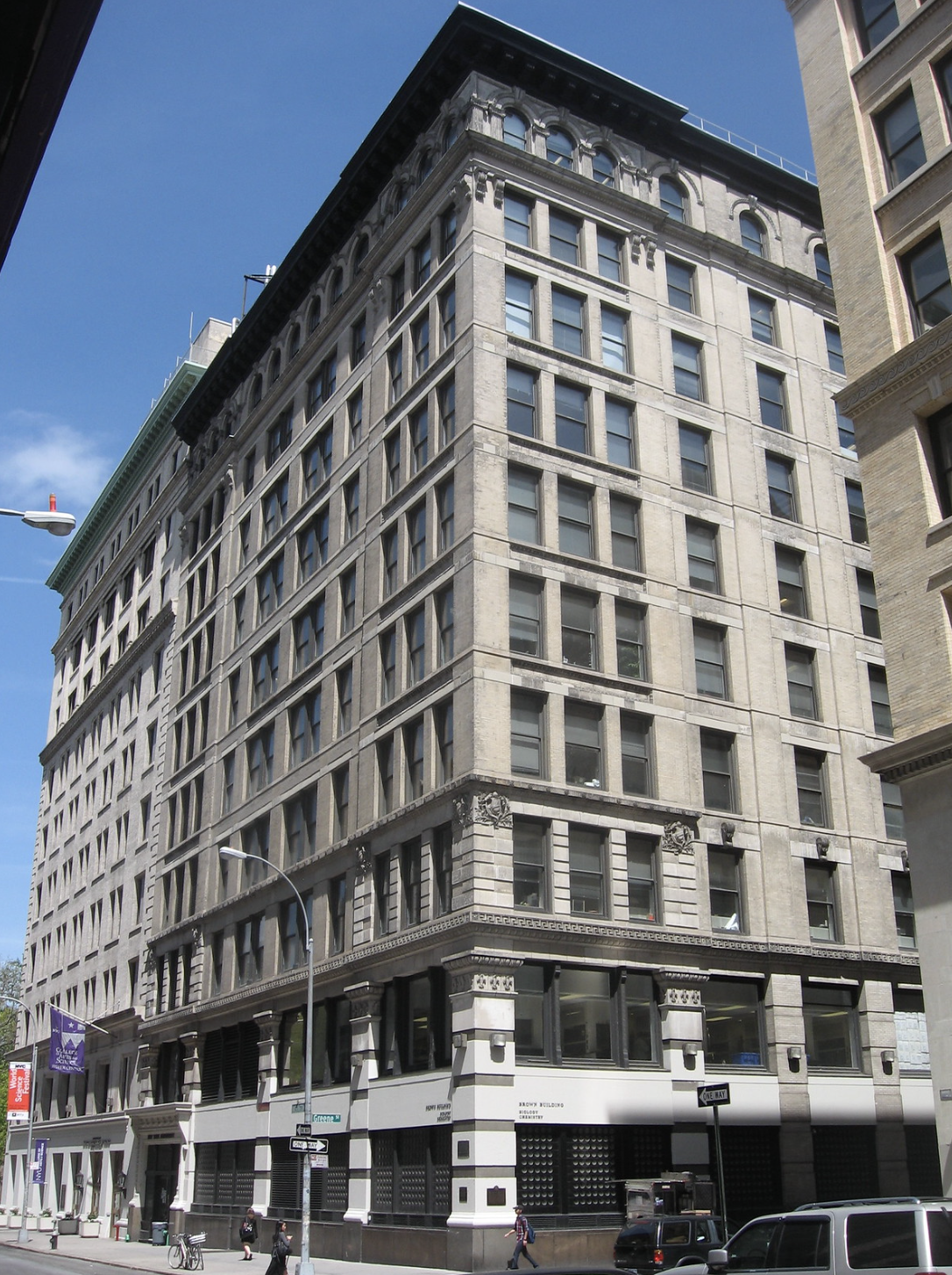
Photo by: Jag9889
There's no previous post
Back to PublicationsThere's no next post
Back to Publications