
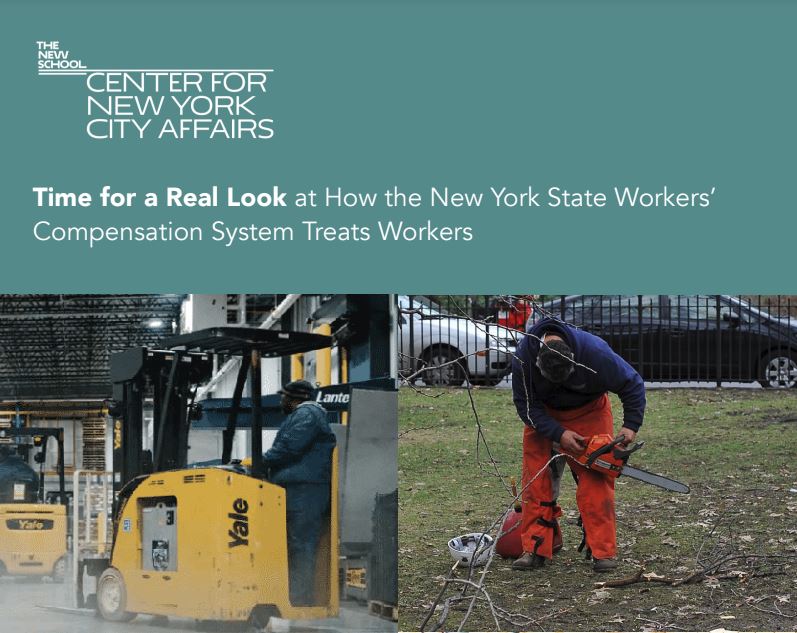


Despite an early history as a national leader in safeguarding the interests of workers injured on the job, New York’s workers’ compensation system has eroded considerably over the years, as legislative and administrative changes have often focused on curtailing benefits rather than adapting to changes in the economy, workforce, and business practices. While legislative changes in 2007 and 2017 included some positive measures, for the most part changes significantly lessened the adequacy of worker benefits. The unfortunate result is that the focus of workers’ compensation in New York has shifted from fairly compensating injured workers to minimizing employer costs.
Over 200,000 workers are injured annually in New York State. Three-fourths of the 115,000 injuries that involve lost worktime occur in low-wage industries. Fatal workplace injuries in New York, particularly in construction, have soared to their highest level in 20 years. The incidence of workplace fatalities has risen sharply in New York over the past decade while it has been flat nationally.
Key findings
The report recommends that New York update income replacement benefit payments, improve access to benefits, particularly for low-wage workers, and ensure that businesses responsibly invest in enhancing workplace safety and assisting workers in safely return to work. Additionally, enforcement should be bolstered against the misclassification of workers as independent contractors, a maneuver used by employers to evade paying workers’ compensation premiums.
By James Parrott and Nicholas B. Martin
Despite an early history as a national leader in safeguarding the interests of workers injured on the job, New York’s workers’ compensation system has eroded considerably over the years, as legislative and administrative changes have often focused on curtailing benefits rather than adapting to changes in the economy, workforce, and business practices. While legislative changes in 2007 and 2017 included some positive measures, for the most part changes significantly lessened the adequacy of worker benefits. The unfortunate result is that the focus of workers’ compensation in New York has shifted from fairly compensating injured workers to minimizing employer costs.
There's no next post
Back to Publications